Serengueti: el Edén de la Planicie Interminable
Serengueti: el Edén de la Planicie Interminable
Serengueti: el Edén de la Planicie Interminable
Basta sobrevolar el Parque Nacional Serengueti para comprender el porqué de su nombre en masai: "llanura interminable". Extensas planicies unidas por colinas, alfombradas por hierbas que cambian paulatinamente de tonalidad con el transcurrir de las estaciones, sombreadas por majestuosas acacias solitarias, surcadas por diversos ríos de llanura, espejadas sobre lagos, pantanos y humedales. El Serengueti es ciertamente un paraíso sobre la tierra, el Edén para todo amante de la fauna y la naturaleza, la Meca de cualquier fotógrafo de vida salvaje. El Serengueti es el hogar de casi todas las más conocidas especies africanas, esa fauna en donde la Naturaleza se ha expresado con quizás su más amplia originalidad de diseños. Allí es donde encontramos las patas más largas, el cuello más alto, la nariz más extensa y versátil, las orejas más grandes, lo más grande, lo más pesado, lo más veloz sobre la tierra, como así también los diseños de piel más variados que llegan a ser elementos identificatorios para cada individuo. Pasamos de la exuberancia de un elefante o un hipopótamo a la casi insignificancia de un diminuto pero colorido lagarto agama mwanzae. Todos detalles que habíamos visto de manera recurrente, pero que no nos habíamos detenido lo suficiente a observar y analizar...en vivo y en directo.
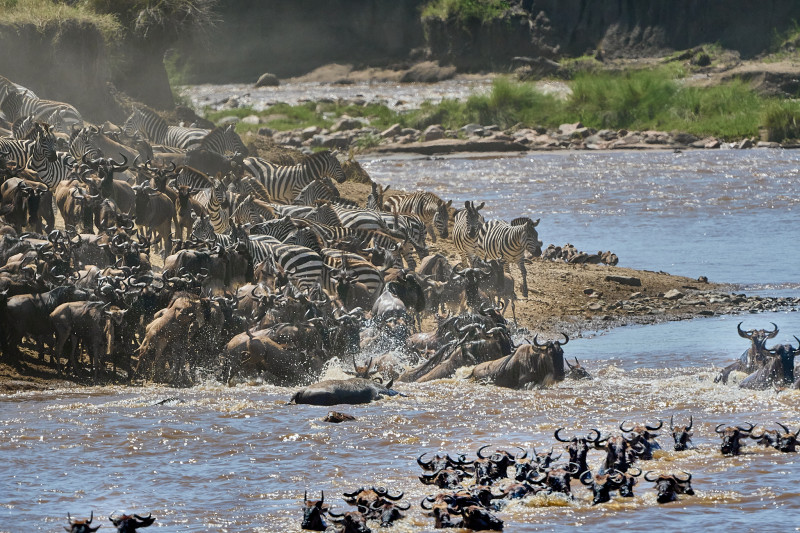
Serengueti es también el paraíso donde se lleva a cabo desde tiempos inmemoriales la más gran migración de animales sobre la tierra: algo más de dos millones de herbívoros entre cebras, gnus y gacelas, que recorren, de este a oeste y de sur a norte, el camino de las lluvias que llevan a buenas pasturas. Es como la imagen de una peregrinación casi religiosa de seres marchando, sin prisa pero sin pausa, en ordenadas hileras que se confunden con el infinito: imponente.
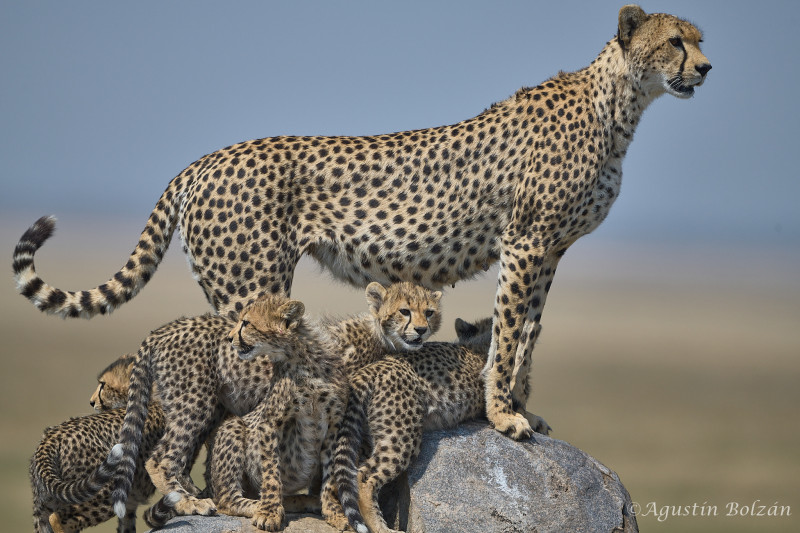
Los largos momentos de paz y armonía bajo el sol de la sabana tanzana se interrumpen de tanto en tanto con escenas propias de la dura vida, tanto de presas para evitar ser cazadas, como de predadores para evitar perecer a causa de la cacería: una distracción, una herida o una mala caída puede ser el inicio de un destino fatal. Las luchas por la supervivencia del individuo o por la reproducción de la especie puede costarle también la vida tanto a los adultos como a sus crías. No sólo se mata por comer o se muere por ser devorado. Llegar a viejo es muchas veces una meta inalcanzable. Así es el diseño de la Naturaleza en Serengueti
Observar, contemplar...finalmente fotografiar. El Serengueti parece haber sido creado para eso. Es de esperar que en las décadas y centurias por venir, la famosa frase "Serengueti no morirá..." de Bernhard Grzimek, pionero en el estudio de la Gran Migración, siga siendo una realidad.
Serengeti: The Eden of the Endless Plain
Just flying over Serengeti National Park is enough to understand the reason for its name in Maasai: “endless plain.” Vast plains joined by hills, carpeted with grasses that gradually change hue as the seasons pass, shaded by majestic solitary acacias, crossed by various lowland rivers, mirrored in lakes, swamps, and wetlands. The Serengeti is truly a paradise on earth, the Eden for every lover of wildlife and nature, the Mecca of any wildlife photographer. The Serengeti is home to nearly all the best-known African species, that fauna in which Nature has expressed perhaps its widest originality of designs. There is where we find the longest legs, the tallest neck, the longest and most versatile nose, the largest ears, the biggest, the heaviest, the fastest on earth, as well as the most varied skin patterns that become identifying features for each individual. We move from the exuberance of an elephant or a hippopotamus to the near insignificance of a tiny but colorful Agama mwanzae lizard. All details we had seen repeatedly, but had not paused long enough to observe and analyze… live and in person.
The Serengeti is also the paradise where, since time immemorial, the greatest animal migration on earth takes place: more than two million herbivores among zebras, wildebeest, and gazelles, traveling from east to west and from south to north, following the path of the rains that bring good pasture. It is like the image of an almost religious pilgrimage of beings marching, without haste yet without pause, in orderly rows that blend into infinity: imposing.
The long moments of peace and harmony under the sun of the Tanzanian savannah are interrupted from time to time by scenes typical of harsh life, both for prey trying to avoid being hunted and for predators trying to avoid perishing as a result of the hunt: a distraction, an injury, or a bad fall can be the beginning of a fatal destiny. The struggles for the survival of the individual or for the reproduction of the species can also cost the lives of both adults and their young. One does not kill only to eat, nor die only by being devoured. Reaching old age is often an unattainable goal. Such is Nature’s design in the Serengeti.
To observe, to contemplate… finally to photograph. The Serengeti seems to have been created for that. It is to be hoped that in the decades and centuries to come, the famous phrase “Serengeti shall not die…” by Bernhard Grzimek, pioneer in the study of the Great Migration, will continue to be a reality.